An ulcer on the tongue can feel disproportionately painful for its size. The tongue moves constantly, is densely supplied with nerve endings and touches everything you eat and drink. In this blog, we’ll look at why tongue ulcers form, how to relieve them and how UlcerEze patches can help.
What is a tongue ulcer?
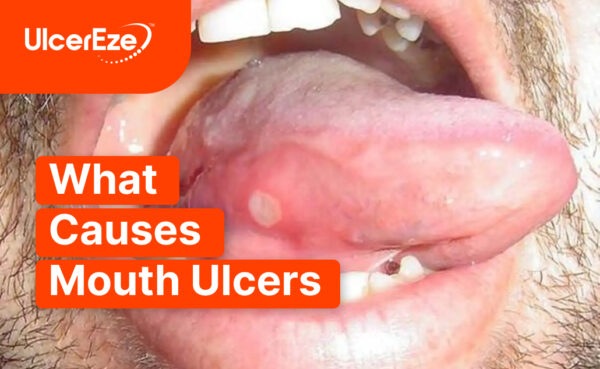
A tongue ulcer is a shallow sore on the surface, side or underside of the tongue. Like other mouth ulcers, it usually has a white or yellow centre with a red border. Most are harmless and heal within one to two weeks.
Why the tongue hurts more
- It moves with every word you say and every swallow
- The surface is rich in nerve endings and taste buds
- It presses against teeth, especially any sharp or chipped edges
- It contacts food and drink directly, including hot, acidic and spicy items
Common causes of tongue ulcers Accidental biting
Biting the tongue while eating or talking is one of the most frequent causes, and the side of the tongue is the usual site.
Sharp or broken teeth
A chipped tooth, worn filling or rough edge can rub the same spot repeatedly, producing an ulcer that keeps returning in the same place.
Braces, aligners and dentures
Brackets, wires and appliance edges create friction against the tongue, particularly after an adjustment or when starting a new tray.
Burns
Hot drinks, pizza and soup can scald the tongue, and the damaged surface may break down into a sore.
Recurrent aphthous ulcers
Some people develop ulcers repeatedly without any obvious injury, often linked to stress, hormones, illness or nutritional deficiencies.
Irritating foods and products
Acidic and spicy foods, very salty snacks and toothpaste containing sodium lauryl sulphate can all aggravate the tongue.
Relieving a tongue ulcer
- Rinse gently with warm salt water two or three times a day
- Stick to soft, cool, bland food while it’s at its worst
- Avoid citrus, tomato, vinegar, chilli, chips and crusty bread
- Use a straw for acidic drinks
- Brush carefully with a soft-bristled brush
- Try an SLS-free toothpaste if ulcers recur
- Ask your dentist to smooth any sharp tooth or filling causing repeated trauma
How UlcerEze can help
The UlcerEze Mouth Ulcer Patch is designed to sit directly over the ulcer and form a protective barrier. On the tongue, where constant movement and contact with food make ulcers particularly uncomfortable, that barrier helps reduce the friction and irritation that keeps aggravating the sore. Apply the patch with a dry finger to the moist ulcer, hold for five to twenty seconds, and wait around thirty minutes before eating or drinking.
When to see a dentist or doctor
Get a tongue ulcer checked if:
- It hasn’t healed after three weeks
- It keeps recurring in the same place
- It’s hard, raised, or has an irregular or rolled edge
- It’s on the side or underside of the tongue and painless
- You have difficulty swallowing, numbness or a lump in the neck
- You smoke or drink heavily and have a persistent sore
A persistent tongue ulcer is usually harmless, but it’s one of the sores that should always be looked at rather than watched indefinitely.
FAQsWhy do I keep getting ulcers in the same place on my tongue?
Repeated trauma is the most likely explanation. Ask your dentist to check for a sharp tooth, filling or appliance edge.
Are tongue ulcers a sign of something serious?
The vast majority are not. Sores that persist beyond three weeks should be assessed.
How can I eat with a tongue ulcer?
Choose soft, cool, low-acid foods, take smaller mouthfuls, and use a straw for drinks. This blog is general information only and is not a substitute for advice from a qualified health professional. Never use internet content for self-diagnosis.