
Most mouth ulcer patches do not fail because the product itself is ineffective. In many cases, the problem is how and where the patch is applied.
Getting a mouth ulcer patch to stay in place depends on a few simple factors: the location of the ulcer, how the patch is applied, and what you do immediately afterwards.
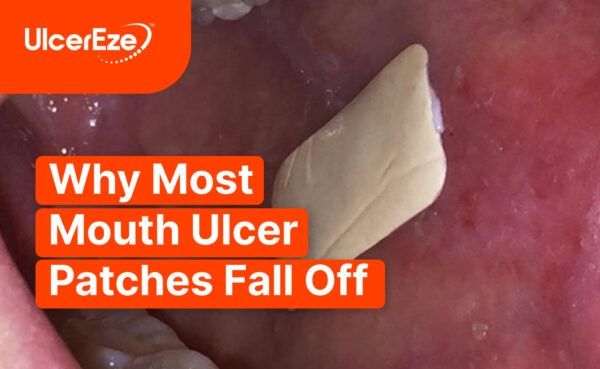
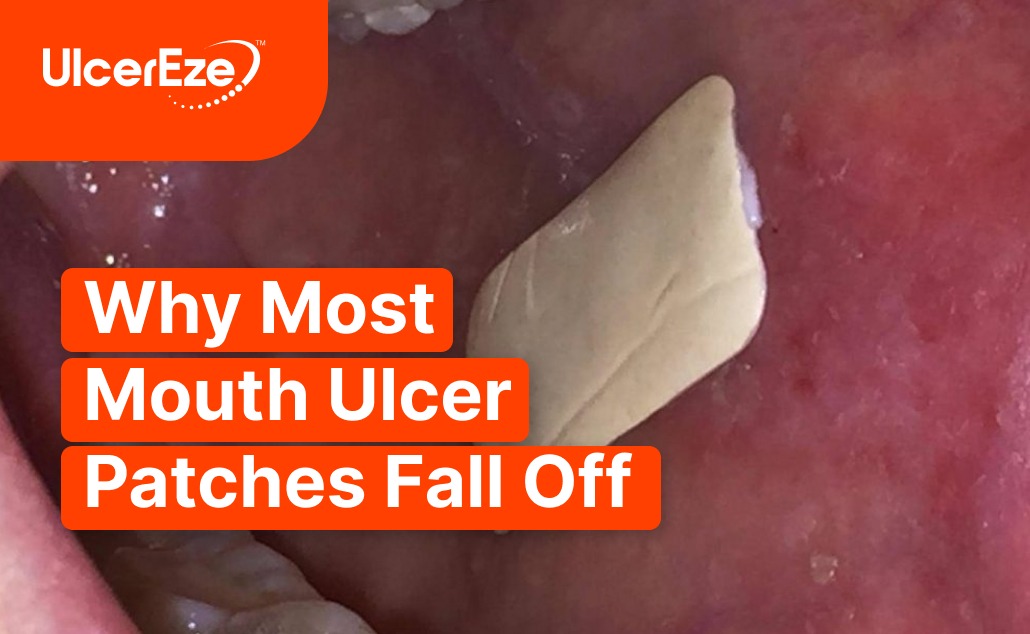
A patch can be knocked loose by food, saliva, or movement if it is applied incorrectly. But when used properly, a patch for mouth sores can create a protective barrier over the ulcer, helping shield it from food, drinks, teeth, and other sources of irritation.
The important thing to understand is what a mouth ulcer patch is designed to do. It is primarily a protective barrier rather than a traditional medicine. It does not need to cure the ulcer to make eating and talking more comfortable.
A mouth ulcer patch is designed to cover the sore and protect it from everyday irritation.
Rather than acting like a conventional medication, the patch creates a physical barrier between the ulcer and things that can aggravate it, such as:
Most minor mouth ulcers heal naturally within around 7–10 days. A protective patch does not necessarily shorten that biological healing process.
Instead, its role is to help protect the ulcer while it heals naturally.
By reducing direct contact with food and other irritants, a mouth sore patch can make the healing period more comfortable and help prevent the sore from being repeatedly irritated during everyday activities.
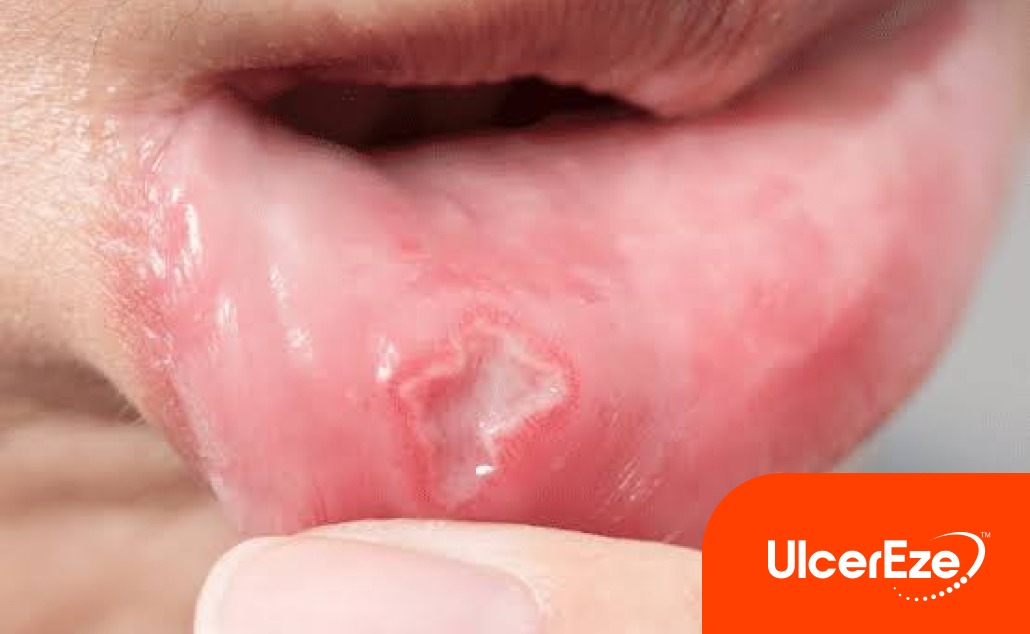
Correct application is one of the biggest factors affecting how long a mouth ulcer patch stays in place.
The patch needs to make good contact with the ulcer and surrounding tissue. Follow the product’s specific application instructions, but generally:
Applying a patch incorrectly can cause it to move or come away during the next meal.
The location of the ulcer also matters. Areas that experience constant contact with the tongue, cheeks, teeth, or food can be more difficult to cover and may cause the patch to wear away sooner.
Some mouth ulcer patches use mineral-based formulations rather than conventional pharmaceutical active ingredients.
For example, UlcerEze’s patch formulation uses calcium, silicon, and phosphorus. These minerals are associated with maintaining healthy oral tissues and supporting normal tissue function.
The important distinction is that these ingredients do not make the product equivalent to a conventional medicinal treatment.
A patch for mouth sores can instead provide a physical protective layer over the affected area. This may make it an option for people looking for a non-medicated approach to managing the discomfort associated with minor mouth ulcers.
Always check the product packaging and manufacturer’s guidance for the current ingredient list, intended use, and suitability.
Age and individual circumstances should always be considered before using an ulcer patch.
Product-specific guidance may vary. For example, some products may be suitable for adults and children above a particular age, while recommending against use in younger children.
Pregnant or breastfeeding women should also check the product instructions and seek advice from a healthcare professional if they are unsure whether a particular oral care product is appropriate.
Do not assume that every mouth sore patch has the same ingredients, age recommendations, or application instructions.
Always follow the manufacturer’s directions and use the product only as intended.
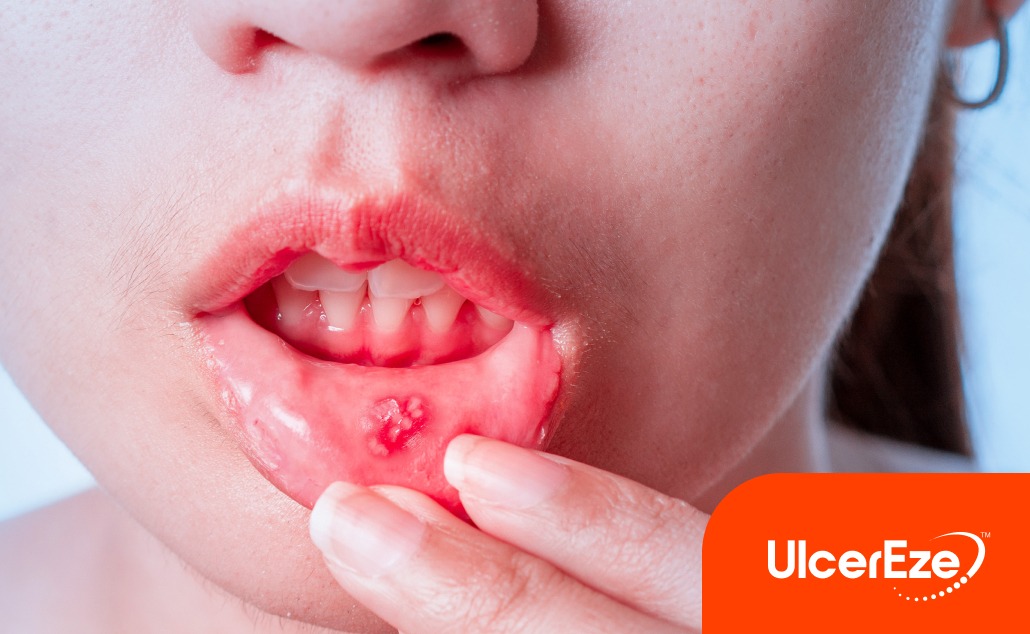
The location of a mouth ulcer can affect how long a patch remains in place.
An ulcer on a relatively flat area of the inner cheek may be easier to cover than one close to a back tooth or in an area where the tongue is constantly moving.
A patch applied to a high-movement area may wear away faster or require reapplication according to the product instructions.
This does not necessarily mean the ulcer mouth patch is not working. It may simply reflect the challenging environment inside the mouth.
The role of an ulcer patch is relatively simple: provide a protective barrier over the sore while the mouth ulcer goes through its natural healing process.
It is not a magic solution, and it should not be marketed as one.
When used correctly, however, a protective patch can help reduce the everyday irritation caused by eating, drinking, talking, and contact with teeth.
That is ultimately what makes a good mouth ulcer patch useful. It does not need to make the ulcer disappear overnight. Its job is to help make the days while the ulcer heals naturally more manageable.