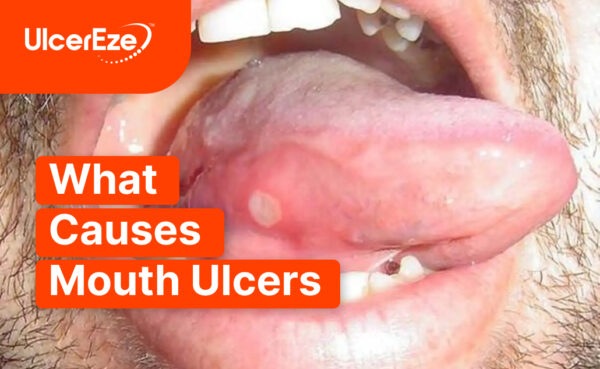

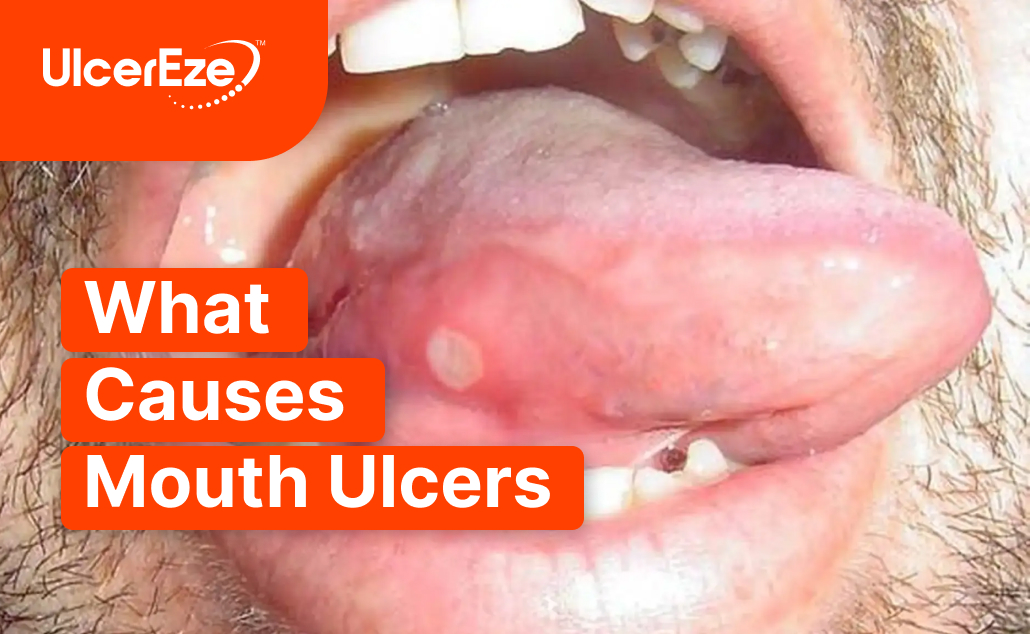
Wondering what causes mouth ulcers on the tongue, why you keep getting mouth ulcers in the same spot, or what the best cure for ulcers in the mouth is? The answer often depends on what is causing the ulcer in the first place.
Biting the inside of your cheek is uncomfortable, but biting your tongue can be particularly painful. Because the tongue moves constantly when you speak, eat and swallow, an ulcer in this area is repeatedly rubbed against your teeth and other surfaces throughout the day.
Tongue ulcers can feel more painful than ulcers in other parts of the mouth because the tongue contains a high concentration of sensory nerves. The front two-thirds of the tongue are mainly supplied by the lingual nerve, while the glossopharyngeal nerve supplies much of the back third.
As a result, even a small ulcer can cause significant pain, particularly when it is repeatedly irritated by eating, drinking or speaking.
There are several possible causes of tongue ulcers. Local irritation and accidental trauma are among the most common, but recurring ulcers can also be associated with nutritional deficiencies, medications and certain health conditions.
Common causes include:
If an ulcer repeatedly appears in exactly the same location, it may be worth checking whether something is constantly rubbing or irritating that area.
For example, nighttime teeth grinding can repeatedly traumatise the same part of the tongue without you realising it. Similarly, a poorly positioned denture, retainer or orthodontic bracket may create ongoing friction.
Traumatic mouth ulcers often heal within a few days once the source of irritation is removed. If an ulcer continues to return in the same location, a dentist can help identify whether a tooth, dental appliance or other source of irritation is responsible.
Not every unusual-looking patch on the tongue is an ulcer.
Geographic tongue is a common and generally harmless condition that causes smooth, red patches on the tongue. These patches can have slightly raised borders and may change shape or move to different areas over time.
Geographic tongue is different from a mouth ulcer because it does not involve the same type of break in the tissue.
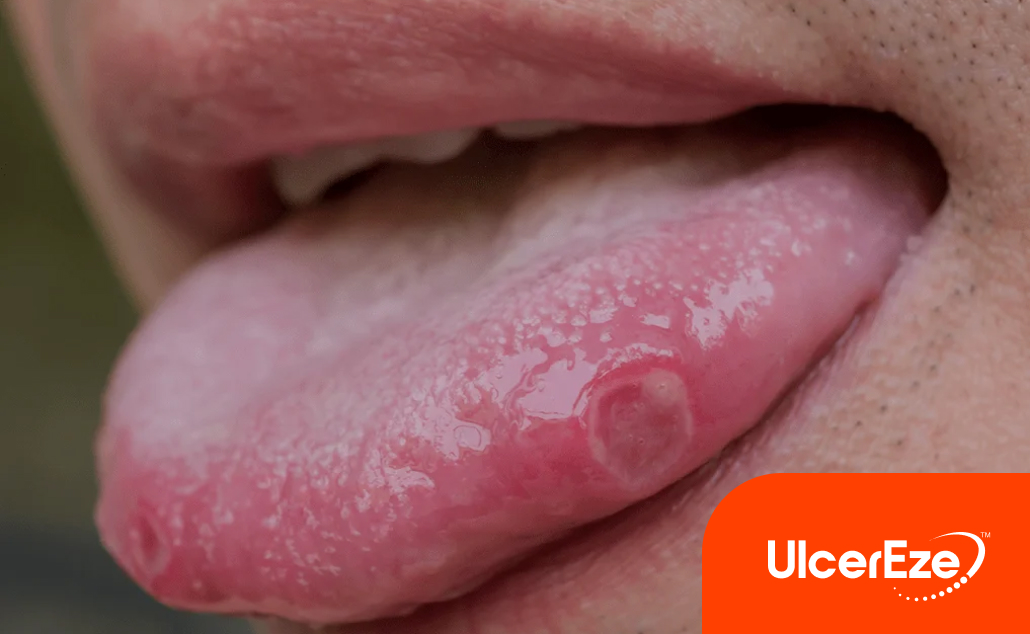
A typical mouth ulcer may appear as a painful sore with a yellowish or greyish centre surrounded by redness. It commonly develops on softer areas of the mouth, including the sides or underside of the tongue.
Understanding the difference is important because the treatment for geographic tongue is not the same as treatment for a mouth ulcer.
If you frequently ask, “Why do I keep getting mouth ulcers?”, it may be worth looking beyond simple irritation.
Recurring mouth ulcers can sometimes be associated with nutritional deficiencies. Iron, vitamin B12 and folate are commonly considered when investigating recurrent ulcers.
Other nutrients may also be relevant. Some research has explored links between recurrent mouth ulcers and lower levels of nutrients such as zinc and vitamin D.
If your iron and vitamin B12 levels are normal but you continue to experience recurrent ulcers, speak with your GP or healthcare professional about whether further investigation is appropriate.
Certain medicines can also contribute to mouth ulcers.
Some NSAIDs, beta-blockers and medicines such as nicorandil have been associated with mouth ulcers. Nicorandil, which is used to treat certain heart conditions, can cause large and painful ulcers in a small number of people.
If you notice that your mouth ulcers started or became more frequent after beginning a new medication, tell your GP or pharmacist. The timing may provide an important clue about the cause.
There is no single cure for mouth ulcers that works for every person because treatment depends on the underlying cause.
For example, an ulcer caused by repeated trauma from teeth grinding needs a different approach from one associated with a nutritional deficiency or medication.
The first step is therefore to identify and address the trigger wherever possible.
While the ulcer is healing, protecting the affected area can help reduce irritation and discomfort. This can be particularly useful for tongue ulcers because the tongue is constantly moving.
Numbing gels may provide temporary relief, but products applied to the tongue can be difficult to keep in place because saliva and constant movement can remove them quickly.
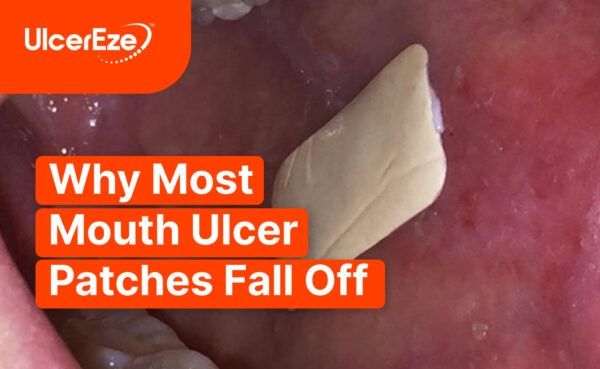
A protective ulcer patch such as UlcerEze is designed to adhere to the ulcer in the presence of saliva and create a protective barrier. This can help shield the sore from repeated irritation while it heals.
UlcerEze contains no steroids or numbing agents and is suitable for children over three when used under adult supervision.
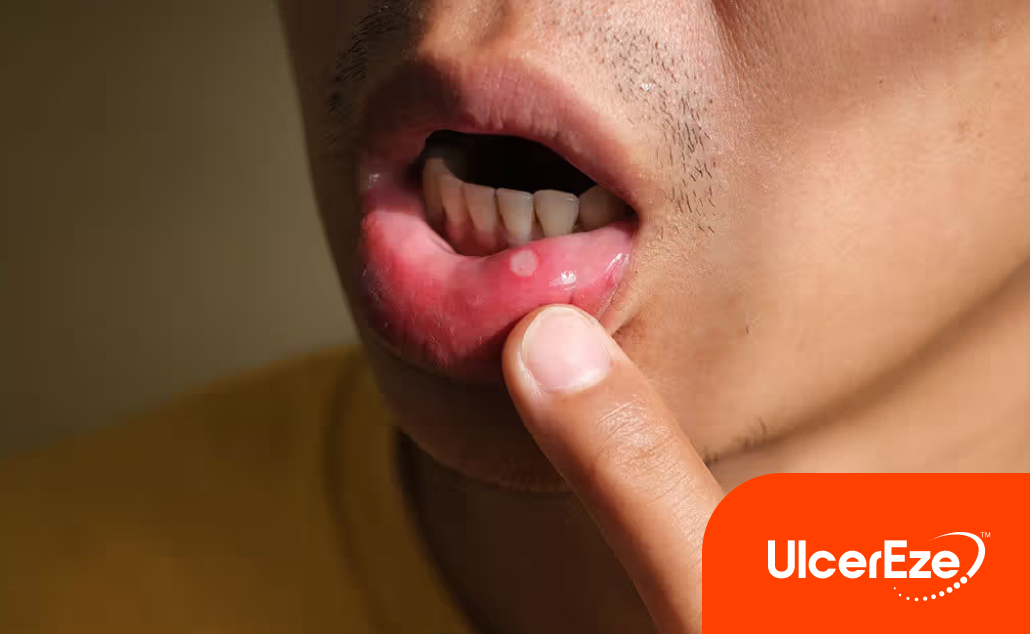
Most ordinary mouth ulcers heal on their own. However, recurring, unusually painful or persistent ulcers should not simply be ignored.
Consider speaking with a dentist or GP if:
A tongue ulcer can be particularly painful because the tongue is constantly moving and contains many sensory nerves. Trauma, teeth grinding, dental appliances, nutritional deficiencies and medications can all play a role in recurrent mouth ulcers.
If you keep getting mouth ulcers in the same spot, identifying the source of repeated irritation may be just as important as treating the ulcer itself.
Once the underlying trigger is addressed, protecting the ulcer while it heals can help reduce further irritation and make the healing period more comfortable.