Most mouth ulcers follow a predictable pattern. Knowing which stage you’re in helps you understand why the pain changes from day to day, and it makes it easier to spot when something isn’t healing the way it should. In this blog, we’ll walk through each stage of a mouth ulcer and explain how UlcerEze mouth ulcer patches can help you stay comfortable along the way.
What is a mouth ulcer?
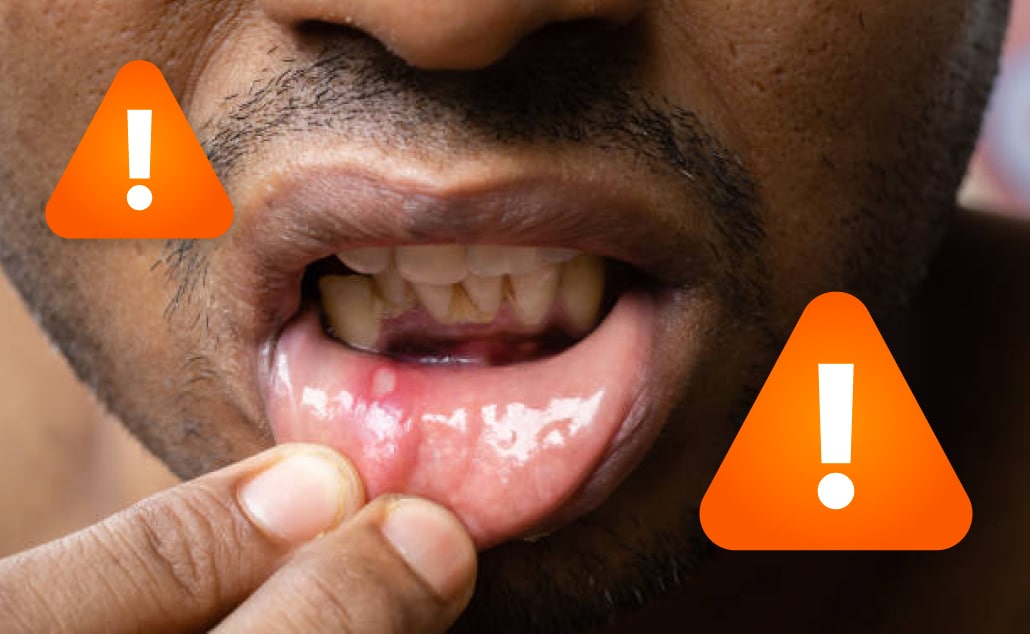
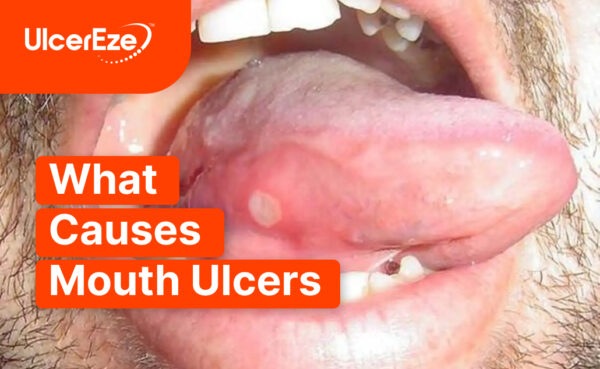
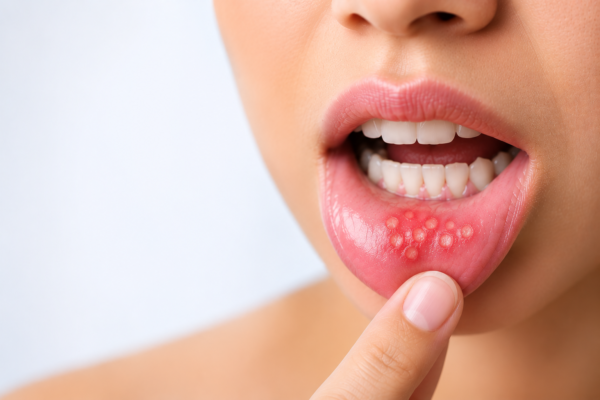
A mouth ulcer is a small, shallow sore that forms on the soft lining of the mouth. They commonly appear on the inner cheeks, lips, tongue or gums, and usually have a white or yellow centre with a red border. Mouth ulcers are not contagious, and most heal on their own within one to two weeks.
The stages of a mouth ulcer
Stage 1: The prodromal stage (day 0–1)
Before anything is visible, many people notice a tingling, burning or prickling feeling in one spot. The area may feel slightly rough to the tongue. This early warning stage often lasts less than 24 hours, and it’s the best time to reduce irritation before the sore fully forms.
Stage 2: The ulcer forms (day 1–3)
A small red bump appears and quickly breaks down into an open sore. The centre turns white, yellow or grey as a protective layer of fibrin forms over it, and a red inflamed ring develops around the edge. This is usually the most painful stage, because the nerve endings under the surface are now exposed to saliva, food, heat and acid.
Stage 3: The peak (day 3–7)
The ulcer reaches its full size and the pain plateaus. Eating, drinking, brushing and talking can all be uncomfortable. The ulcer may look worse at this point even though it has stopped growing. Some people develop more than one ulcer in the same period.
Stage 4: Healing (day 7–14)
The red border begins to fade, the white centre shrinks, and the pain eases noticeably. New tissue grows in from the edges inward, so the ulcer gets smaller rather than shallower. Most people notice a sudden improvement around day seven to ten.
Stage 5: Resolved (day 10–14)
The surface closes over, and the area returns to normal. Ordinary ulcers heal without leaving a scar. Larger ulcers can take longer and may occasionally leave a small mark.
What can slow healing down
- Repeated trauma to the same spot, such as a sharp tooth, braces bracket or aligner edge
- Spicy, salty, acidic or crunchy foods that irritate the open surface
- Toothpaste containing sodium lauryl sulphate (SLS), which some people find aggravating
- Run-down periods, poor sleep or ongoing stress
- Low levels of iron, vitamin B12 or folate
Simple ways to stay comfortable through the stages
- Rinse gently with warm salt water to keep the area clean
- Choose soft, bland foods while the ulcer is at its peak
- Avoid citrus, tomato, vinegar, chips and crusty bread
- Brush carefully around the sore with a soft-bristled brush
- Use a straw for acidic drinks so they bypass the ulcer
How UlcerEze can help
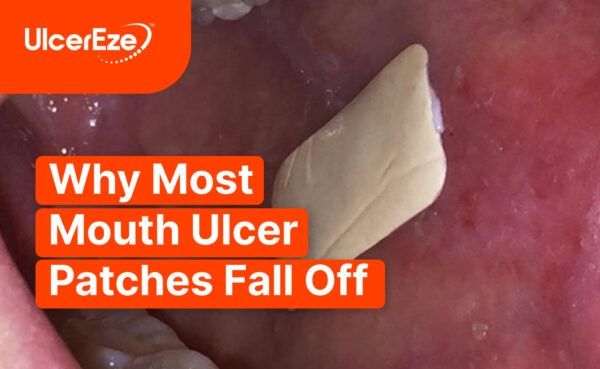
The UlcerEze Mouth Ulcer Patch is designed to sit directly over the ulcer and form a
protective barrier. Because it stays in place rather than washing away like a gel, it helps
shield the sore from food, drink and movement inside the mouth during the painful middle
stages. Apply the patch to a moist ulcer with a dry finger, hold for five to twenty seconds,
and avoid eating or drinking for about thirty minutes afterwards.
When to see a dentist or doctor
Speak with a health professional if:
- An ulcer hasn’t healed after three weeks
- It keeps returning in the same spot
- It’s unusually large, spreading or extremely painful
- You have several ulcers at once alongside fever or feeling unwell
- The edges look raised, hard or irregular
FAQs
How long should a mouth ulcer take to heal?
Most heal within one to two weeks. Larger ulcers can take longer.
Why does my ulcer look worse on day three?
That’s usually the peak stage. The white centre and red border are both signs of the normal inflammatory process, not infection.
Can I speed up healing?
You can’t force tissue to regenerate faster, but reducing irritation gives the area the best chance to recover comfortably. This blog is general information only and is not a substitute for advice from a qualified health professional. Never use internet content for self-diagnosis.