Food doesn’t cause every mouth ulcer, but it’s one of the easier triggers to test and adjust. Some foods physically injure the lining, some irritate an existing sore, and some appear repeatedly in people who get ulcers often. In this blog, we’ll cover the usual suspects, what to eat instead and how UlcerEze patches can help while an ulcer heals.
What is a mouth ulcer?
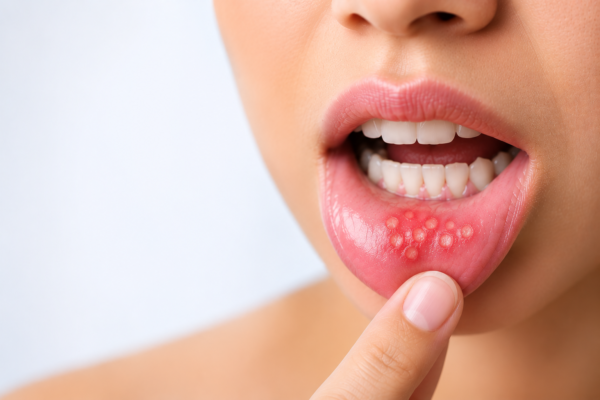
A mouth ulcer is a shallow sore on the soft lining of the mouth, usually on the inner cheeks, lips, tongue or gums, with a white or yellow centre and a red border. Most heal within one to two weeks.
How food contributes
Physical injury
Hard, sharp foods can nick the lining, and that small break can develop into an ulcer. Crusty bread, corn chips, crisps, hard crackers, toast crusts and nuts are frequent culprits.
Direct irritation
Acidic, salty and spicy foods sting an existing ulcer and can slow comfortable healing, even if they didn’t cause it.
Individual sensitivity
Some people find particular foods reliably precede an outbreak. Commonly reported ones include chocolate, coffee, nuts, tomatoes, citrus, strawberries and some cheeses. Triggers are personal, which is why a diary is more useful than a blanket list.
Nutritional gaps
Diets low in iron, folate, vitamin B12 or zinc are associated with more frequent ulcers. Restrictive eating, poorly planned vegetarian or vegan diets, and heavy reliance on convenience food can all contribute.
The common trigger foods
Acidic: oranges, lemons, limes, grapefruit, pineapple, tomatoes and tomato sauce, vinegar and dressings, soft drinks, fruit juice, wine
Spicy: Chilli, curry, hot sauce, pepper, wasabi
Salty: Crisps, salted nuts, pretzels, cured meats, Vegemite on the sore side
Hard and sharp: Crusty bread, toast, crackers, corn chips, hard raw vegetables, nuts
Hot in temperature: Tea, coffee, soup and pizza, which can scald the lining
Individually reported: Chocolate, coffee, cow’s milk, cheese, strawberries, eggs, gluten-containing foods for those with coeliac disease
What to eat instead
- Porridge, smooth yoghurt, custard and rice pudding
- Scrambled eggs, mashed potato, soft pasta, risotto
- Smoothies and banana, melon, mango, pear
- Well-cooked vegetables, casseroles, soft fish, slow-cooked meats
- Room-temperature or cool foods rather than piping hot
- Milk and water rather than juice or soft drink
Iron-rich foods, leafy greens, legumes and fortified cereals are worth building in if ulcers are frequent.
Practical eating tips during an ulcer
- Use a straw for acidic or cold drinks so they bypass the sore
- Cut food smaller and chew on the opposite side
- Let hot food cool for a few minutes
- Rinse with water after acidic food
- Rinse with warm salt water between meals
How UlcerEze can help
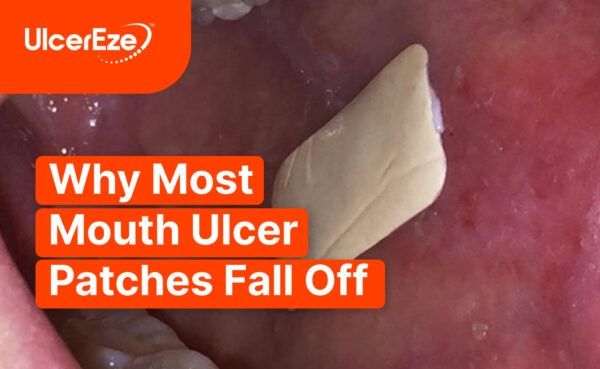
The UlcerEze Mouth Ulcer Patch is designed to sit over the ulcer and form a protective barrier, which is particularly useful around mealtimes when food and drink make contactwith the sore. Because it stays in place rather than washing away like a gel, it can help make eating and drinking more comfortable. Apply the patch to a moist ulcer with a dry finger, hold for five to twenty seconds, and wait about thirty minutes before eating.
When to see a dentist or doctor
Get advice if:
- An ulcer lasts longer than three weeks
- Ulcers are frequent despite dietary changes
- Ulcers come with bloating, diarrhoea, weight loss or fatigue, which may point to coeliac disease or another gut condition
- You’re worried your diet may be low in iron, folate or B12
FAQs
Does chocolate cause mouth ulcers?
It’s one of the most reported personal triggers, though it doesn’t affect everyone. A short trial without it will tell you more than any general answer.
Should I cut out acidic foods permanently?
Not necessarily. Most people only need to avoid them while an ulcer is active.
Can a food allergy cause mouth ulcers?
Food sensitivities and coeliac disease are both associated with recurrent ulcers. Persistent ulcers alongside gut symptoms should be assessed. This blog is general information only and is not a substitute for advice from a qualified health professional. Never use internet content for self-diagnosis.