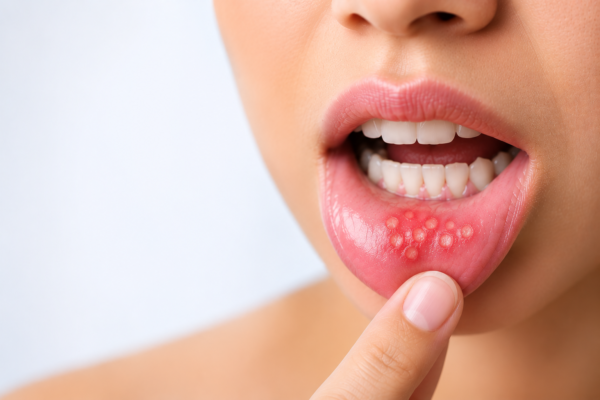
If you get mouth ulcers regularly, you’ve probably seen the advice to switch to an SLS-free toothpaste. It’s one of the more commonly recommended changes, and it’s cheap and easyto test. In this blog, we’ll explain what SLS is, what the evidence actually says and how to run a proper trial.
What is SLS?
Sodium lauryl sulphate (SLS) is a detergent and foaming agent found in most mainstream toothpastes, as well as in shampoo and body wash. In toothpaste, it creates the foam people associate with a clean mouth and helps spread the paste around. It is not the active ingredient — fluoride is what protects your teeth.
Why it’s linked to mouth ulcers
SLS is a surfactant, which means it can disrupt the thin protective layer of mucin that covers the lining of the mouth. With that layer disturbed, the underlying tissue is more exposed to irritants, and in people already prone to ulcers this may make sores more likely to form or slower to settle comfortably.
Some people also experience peeling or sloughing of the mouth lining with SLS toothpastes, which is harmless but often mistaken for something more serious.
What the evidence says
The research is mixed but leans in a consistent direction. Several small studies have found that people with recurrent aphthous ulcers reported fewer ulcers, or less pain from them, when using an SLS-free toothpaste. Other studies have found little difference in the number of ulcers but a reduction in pain and duration. The overall picture is that SLS does not cause mouth ulcers, but for a subgroup of people who are already prone to them it appears to be an aggravating factor. The practical takeaway: it’s not a cure, the effect isn’t universal, and it’s still worth trying if you get ulcers often. There’s no downside to a low-cost switch.
How to run a proper trial
1. Buy one SLS-free toothpaste with fluoride.
Check the ingredients list for sodium lauryl sulphate or sodium dodecyl sulphate. Don’t drop fluoride in the process — it’s the part that matters for your teeth.
2. Use it exclusively for three months.
Ulcers vary naturally, so a two-week trial tells you nothing.
3. Keep a simple diary.
Note the date of each ulcer, how painful it was and how long it lasted.
4. Compare with the three months before.
If frequency, pain or duration have dropped noticeably, you’ve found something useful.
5. If nothing changes, look elsewhere.
Trauma from a sharp tooth, low iron or B12, stress and specific food triggers are all more likely explanations for most people.
Other things to check at the same time
- Are you brushing too hard, or using a medium or hard brush? Switch to soft.
- Is a tooth, filling or appliance rubbing the same spot?
- Have you had iron, folate and B12 checked?
- Do ulcers track with stress, sleep or your cycle?
How UlcerEze can help
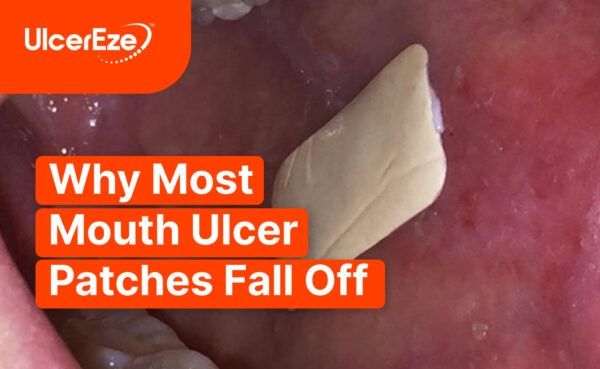
Changing toothpaste is a prevention strategy, and it takes months to evaluate. In the meantime, the UlcerEze Mouth Ulcer Patch sits over an existing ulcer and forms a protective barrier, helping shield it from food, drink and friction — including from brushing — while it heals.
When to see a dentist or doctor
Get advice if:
- An ulcer lasts more than three weeks
- Ulcers remain frequent after a proper three-month trial
- Your mouth lining peels or sloughs persistently
- Ulcers come with gut symptoms, fatigue or unexplained weight loss
- You’re not sure which toothpaste suits you — your dentist can recommend one
FAQs
Is SLS harmful?
It’s approved for use in oral care products and is considered safe. The question isn’t safety; it’s whether it irritates your mouth specifically.
Will SLS-free toothpaste clean as well?
Yes, provided it contains fluoride. The foam is cosmetic, not functional.
How long before I know if it’s working?
Give it three months. Ulcer frequency fluctuates too much to judge over a shorter period. This blog is general information only and is not a substitute for advice from a qualified health professional. Never use internet content for self-diagnosis.