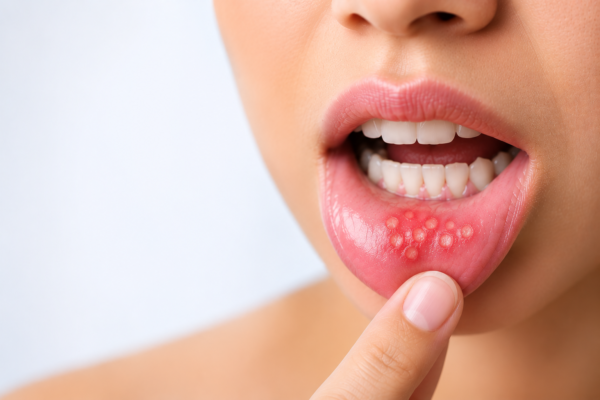

A “normal” blood test does not always tell the full story behind recurring mouth ulcers. This guide explains why ferritin, not just haemoglobin, matters, what the research actually shows, and when it is worth asking your GP for a closer look, while also covering simple ways to manage the pain while you sort out the cause.
Someone gets a blood test after yet another mouth ulcer. Haemoglobin comes back normal, so the result gets filed away as unremarkable. What often does not get checked, or gets checked and read too quickly, is ferritin, the marker that tends to drop well before haemoglobin ever does.
That gap matters more than it sounds. A normal haemoglobin result rules out anaemia. It does not rule out low iron stores, and for someone dealing with mouth ulcers that keep resurfacing, those are two very different questions.
What Ferritin Actually Measures, and Why It Is Different From Checking “Iron”
Ferritin is the protein that stores iron inside the body, and the blood level of ferritin reflects how much iron is sitting in reserve, not how much is currently circulating in red blood cells. Haemoglobin only starts to fall once those reserves are largely used up. That means ferritin can already be low, sometimes for months, while haemoglobin still reads within a normal range. Clinicians refer to this earlier stage as iron deficiency without anaemia, and it is a real, measurable state, not a technicality. A full iron study that includes ferritin catches this stage. A basic full blood count on its own often does not.
What the Research on Ferritin and Recurrent Mouth Ulcers Actually Shows
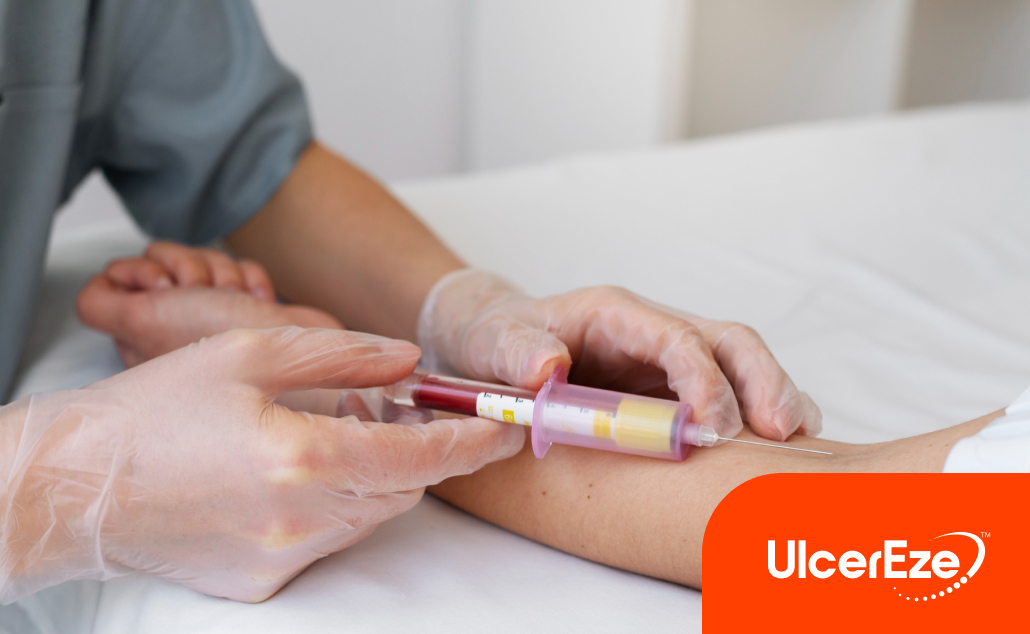
Several studies have looked specifically at serum ferritin in people with recurrent aphthous stomatitis, the clinical name for recurring mouth ulcers, and found it running lower than in people without the condition, in one study averaging around 31 nanograms per millilitre compared to roughly 48.5 in healthy controls. Other research has found low ferritin in about 8 per cent of people with recurring ulcers, compared with under 3 per cent of those without, and combined deficiencies across ferritin, haemoglobin and related markers in as many as 13 per cent of cases. Worth saying plainly: the research is not unanimous. A small number of studies have found ferritin running higher rather than lower in people with recurring ulcers, which is partly explained by ferritin also rising as part of the body’s general inflammatory response, separate from how much iron is actually stored. That is exactly why a single ferritin number needs a clinician’s interpretation, not a home reading of a lab printout. In practical terms, low ferritin still turns up meaningfully more often in people with recurring ulcers than in the general population, even accounting for that inconsistency across studies, which is why it is worth asking about specifically rather than assuming a standard blood test already ruled it out.
What Is the Reason for Mouth Ulcer, When Iron Is Not the Whole Story
Ferritin is one thread, not the whole picture. Ask what is the reason for mouth ulcer in any individual case and the honest answer is that it is rarely just one thing. Accidental bites, toothpaste containing sodium lauryl sulphate, stress, hormonal shifts, and coeliac or Crohn’s disease all show up as recognised triggers alongside vitamin B12, folate and iron. Low ferritin raises the odds in someone with a pattern of recurring ulcers, but it does not explain every case, and treating it as the only possible cause risks missing something else that needs its own attention. None of these triggers rule each other out either. Someone with borderline ferritin and a habit of biting the inside of their cheek during a stressful week is dealing with two separate contributors at once, not one competing explanation for the other.
Ulcers Treatment Starts With Knowing Which Number to Ask For
Ulcers treatment that only addresses the sore in front of you skips the more useful question underneath it. If ulcers are showing up more than three or four times a year, it is worth asking a GP directly for a full iron study, ferritin included, rather than assuming a standard blood test already covered it. Because ferritin behaves differently in the presence of inflammation, the result is genuinely best read by a clinician alongside the fuller picture, not interpreted alone against a generic reference range. Mentioning the pattern itself, how many ulcers a year, how long each one lasts, whether they cluster during stressful periods, gives a GP more to work with than the ferritin number on its own.
How to Cure Mouth Ulcers Fast Naturally While You Sort Out the Cause
None of this changes what actually helps the ulcer sitting in your mouth right now. For most people searching how to cure mouth ulcers fast naturally, the basics still hold: a saltwater rinse a few times a day, raw honey applied directly to the sore, and cutting out acidic, spicy or very hot food and drink while it heals. A soluble patch such as UlcerEze adds a further layer, bonding to the ulcer on contact with saliva and holding a protective barrier in place for hours, so the tissue underneath can repair without being reopened every time you eat or speak. UlcerEze is TGA-approved and formulated by pharmacists using naturally sourced ingredients, silicon, calcium and phosphorus, with no steroids, numbing agents or preservatives, and it is suitable for adults and children over three. It will not correct a ferritin deficiency. It just makes the two weeks spent waiting on that answer considerably easier to get through.
That “normal” blood test might just mean the wrong number was checked. Ask for ferritin specifically next time, and let the sore heal properly while you get the answer.
While you’re sorting out that referral or blood test, it’s worth keeping an UlcerEze patch on hand for whatever ulcer shows up next, so the process is a lot less painful in the meantime.